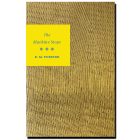
Description
About the Author
Best known for his novels that examine class differences and hypocrisy in early 20th-century British society including A Room with a View, Howards End, and A Passage to India, Forster’s ironic tone, subtle plot undercurrents, and emotional subjects secure his place as a literary legend. What Forster is less known for is his groundbreaking science fiction. Extraordinarily ahead of its time, Forster’s dystopian fantasy The Machine Stops has influenced writers and filmmakers for over a century. 2001: A Space Odyssey and The Matrix, for example, were deeply inspired by this groundbreaking work. In our age dependent on technology, and ever more populated by virtual realities and artificial intelligence, we strongly encourage you to read, enjoy, and be cautioned by this important and visionary work.
E. M. Forster was an English author celebrated for his iconic novels and short stories that frequently examined class differences and hypocrisy. Born as an only child in London in 1879, Forster lived with his mother in their home. Forster attended Kings College, Cambridge to study history and classics. After graduating he travelled through Europe with an interest in classical heritage. After returning from these extensive travels, he set out to write. Forster published his first novel, Where Angels Fear to Tread, in 1905. He went on to publish five novels in his lifetime and one more shortly after his death. Extremely successful and recognized in his lifetime, he was nominated 16 times for the Nobel Prize for Literature — though he never won.
His iconic story The Machine Stops was first published in The Oxford and Cambridge Review in 1909. It was later republished in Forster’s The Eternal Moment and Other Stories in 1928, along with five other short stories he had written between 1903 and 1914.