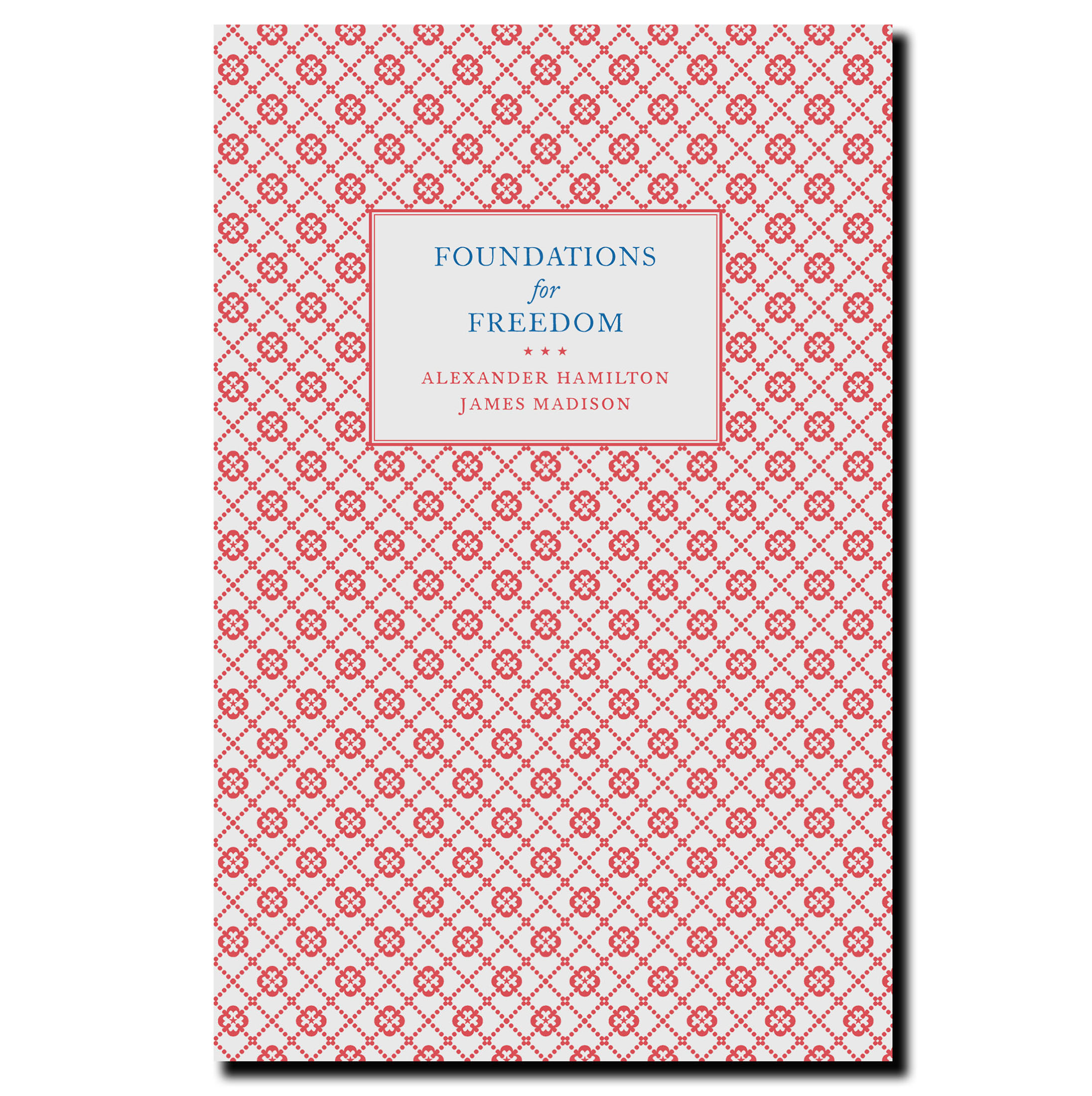



Description
Alexander Hamilton was a Founding Father, statesman, and political theorist whose writings helped establish the constitutional foundation of the United States. His acclaimed contributions to The Federalist Papers—comprising 51 of the 85 essays—include seminal works on executive energy, national security, and judicial review. Known for his energetic prose, fierce sense of urgency, and commanding legal intellect, Hamilton’s writing bridges political philosophy, constitutional law, economics, and statecraft.
He was the nation’s first Secretary of the Treasury and served as a delegate to the Constitutional Convention representing New York. Earlier in his career, he was a Revolutionary War artillery officer and military aide-de-camp to General George Washington. He was also a member of the Confederation Congress, a practicing attorney, and the founder of the Bank of New York.
James Madison was a Founding Father, statesman, and political thinker whose ideas shaped the architecture of American constitutional democracy. His acclaimed contributions to The Federalist Papers—authoring 29 of the essays—include essential treatises on republican self-governance, political factions, and the balance of powers. Known for his rigorous logic, deep historical erudition, and nuanced understanding of human nature, Madison’s writing bridges political theory, institutional design, history, and civic liberty.
He served as the fourth President of the United States and was Secretary of State under Thomas Jefferson. Earlier in his career, he was a leading delegate at the Constitutional Convention and a member of the Continental Congress. He was also the principal drafter of the U.S. Bill of Rights and served as rector of the University of Virginia.
The Federalist Papers are a series of 85 essays written by Alexander Hamilton, James Madison, and John Jay in 1787–1788 to persuade the states to ratify the newly drafted U.S. Constitution. Published under the shared pseudonym “Publius,” the essays explain the principles behind the proposed government, address fears about federal power, and outline how the Constitution’s structure—especially its separation of powers and system of checks and balances—would protect liberty. Today, they remain foundational texts for understanding the framers’ intentions and the philosophical roots of American constitutional government.