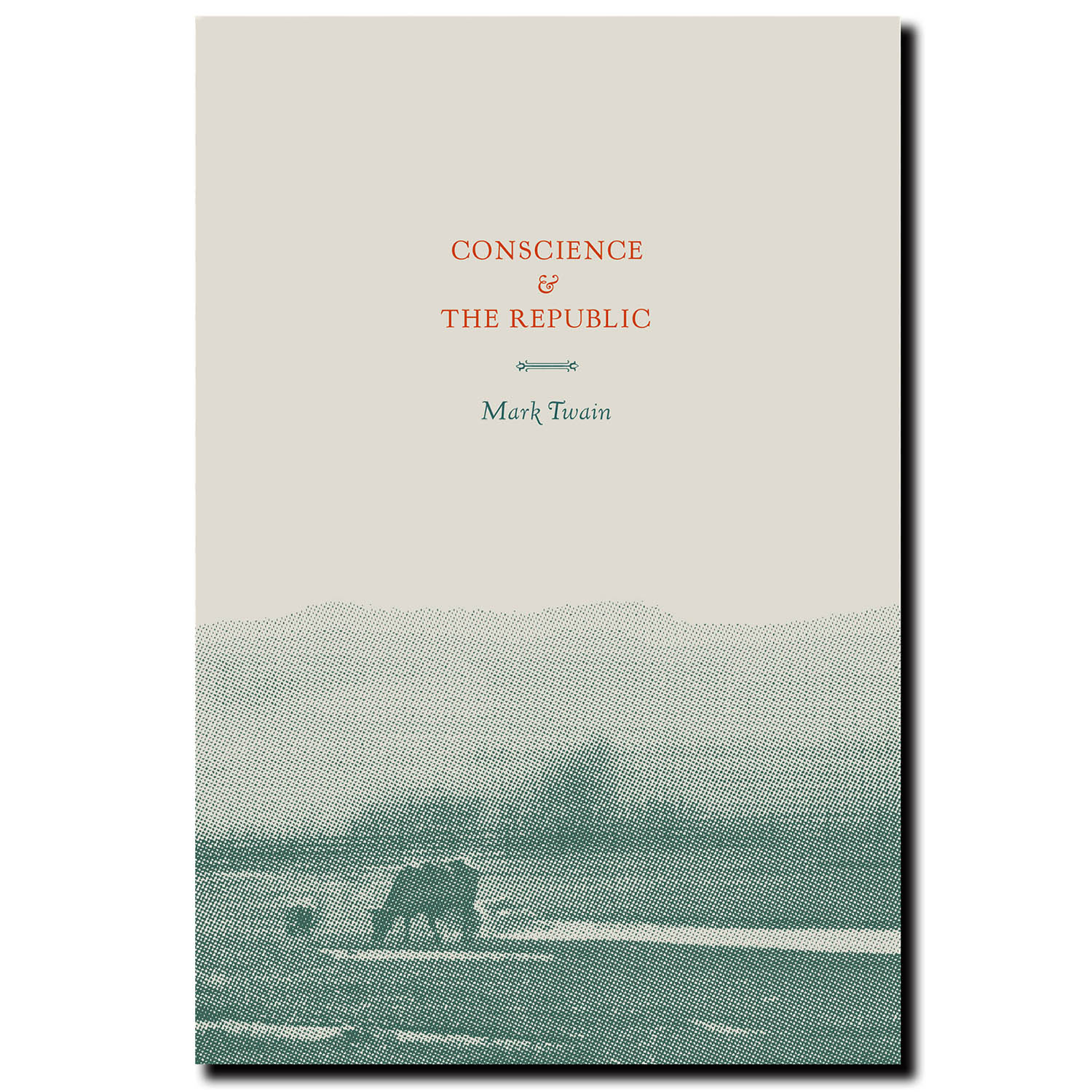
The three works gathered here were written across three decades: The Facts Concerning the Recent Carnival of Crime in Connecticut (1876), The United States of Lyncherdom (1901), and The War Prayer (1904–05). Each reflects a deepening intensity of thought. Two of these pieces—Lyncherdom and The War Prayer—were withheld from publication during Twain’s lifetime for their severity, and appeared only later, when their immediate moment had passed, but their larger meaning endured.
In these late works, Twain considers the matter of conscience with unusual clarity. The pieces trace a widening arc: from the private reckonings of the individual, to the conduct of the crowd, to the nation at prayer. All three reflect a writer who had turned from comedy toward something more searching: an examination of conscience—not only as a private burden, but as a force shaping public life. They compel us to consider the moral consequences of our actions, our restraint, and our silence.
Mark Twain is remembered as one of America’s greatest humorists—the author of Huckleberry Finn and Tom Sawyer, whose voice helped define the language and character of the nation. Yet in his later years, his writing took on a different tone. The laughter grew thinner. The irony sharpened. What emerged was a sustained and often unsparing concern with moral life.
Twain was raised in Hannibal, Missouri, which provided the setting for both Huckleberry Finn and Tom Sawyer. Before his literary career, he worked as an apprentice at a printing press and then as a typesetter for his brother’s newspaper. It was there he began writing with the occasional contributing article, and he was eventually spurred away from journalism and towards fiction.